Unlocking Ranked and Navigating the New Ladder
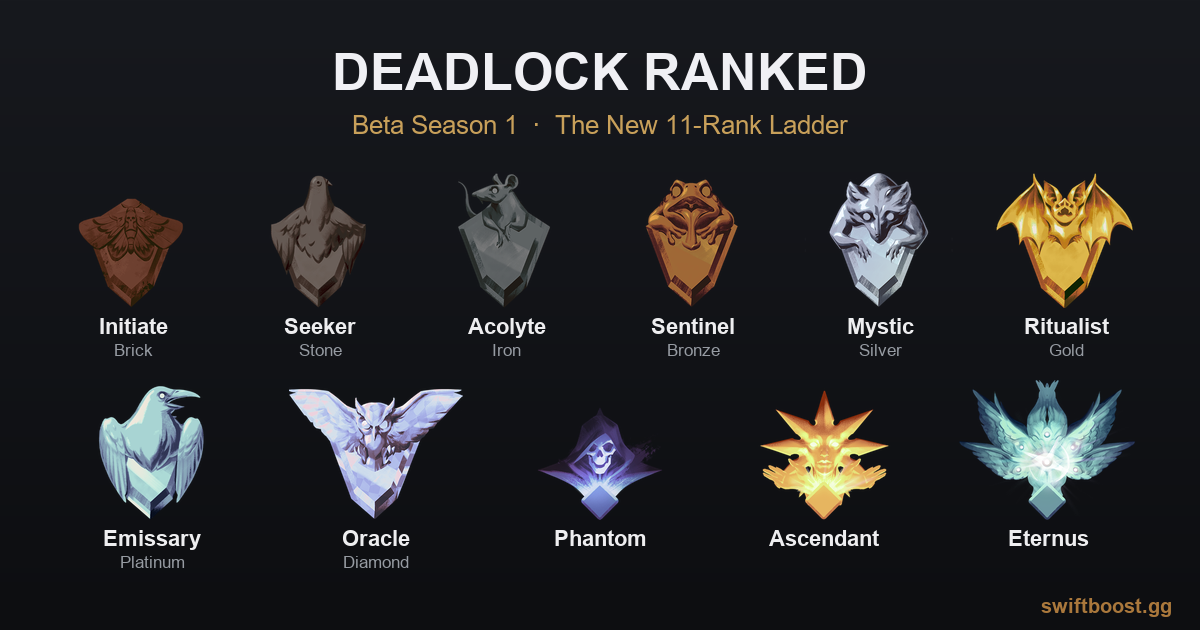
Access to the competitive queue is strictly gated behind performance metrics in Standard mode, ensuring that only players with proven hero proficiency can participate. You must accumulate 60 wins in Standard Mode to enter calibration, but the actual barrier to entry for the ranked ladder requires you to win 43 of those 60 games while maintaining a minimum of 15 wins on a single hero. This dual requirement prevents casual players from flooding the matchmaking pool and ensures that participants have demonstrated consistency with specific characters before facing ranked opponents. Once unlocked, your progress is tracked through an 11-rank system, where each tier is subdivided into six distinct subranks labeled I through VI. The hierarchy begins at the bottom with Initiate (Brick) and ascends through Seeker (Stone), Acolyte (Iron), Sentinel (Bronze), Mystic (Silver), Ritualist (Gold), Emissary (Platinum), Oracle (Diamond), before reaching the elite tiers of Phantom, Ascendant, and Eternus. Each subrank promotion requires a specific point threshold, typically involving gains of around 250 Rank Points per game, with approximately 1,000 points needed to cross a subrank and 2,000 points to promote to the next rank.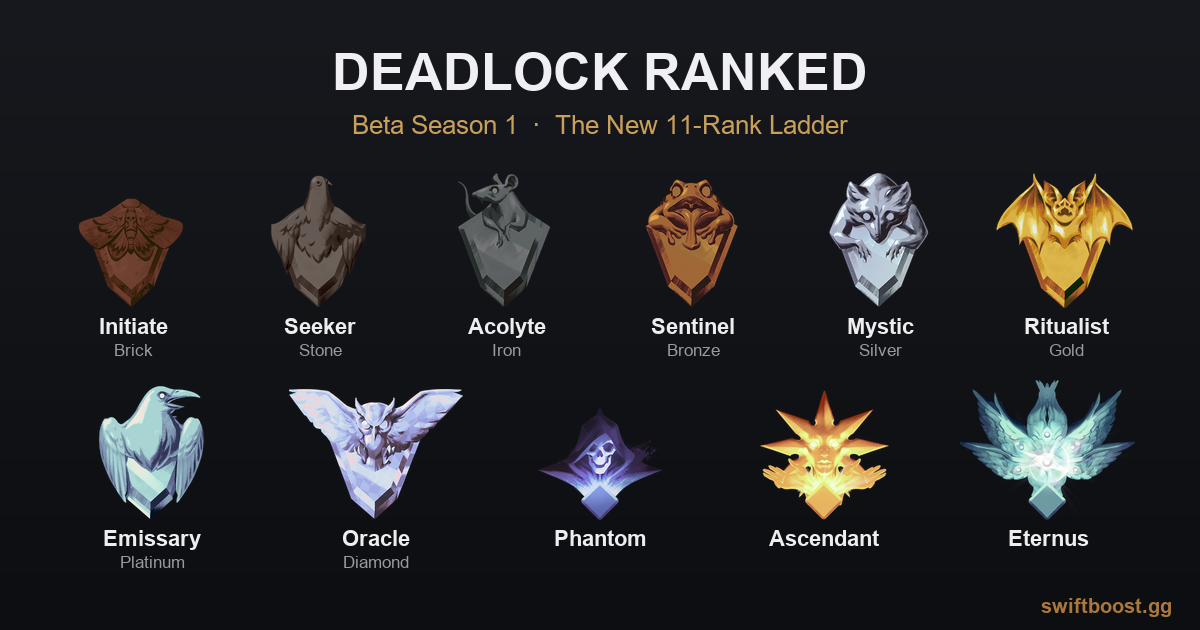
- Eligibility Thresholds: You must win 43 Standard games and achieve 15 wins on one hero to unlock ranked; failing either metric keeps you in calibration.
- Rank Hierarchy: The ladder spans 11 tiers from Initiate to Eternus, with the top three tiers featuring unique percentile-based subrank assignments rather than fixed point thresholds.
- Subrank Progression: Each of the 11 main ranks contains six divisions (I-VI), requiring consistent performance to accumulate the necessary points for promotion.
- Eternus Mechanics: Only players within one rank can queue together, and Eternus players must queue with other Eternus members while their subranks update dynamically based on player percentiles.
Matchmaking Dynamics and Early Season Stability
The transition to the new ranked system is expected to be volatile as the matchmaking pool stabilizes. Valve has warned that the initial weeks will be "very rocky" because the majority of players have not yet completed the rigorous unlock requirements, leading to a thin player base and potential queue time inconsistencies. During this calibration period, the matchmaker strives to create balanced games while allowing you to play your preferred heroes, but expect variance in match quality until the system fully adjusts to the new distribution of skills across the 11-rank ladder. To mitigate the impact of mismatched skill levels, Deadlock introduces a hero swap phase before every match begins, giving teams a chance to adjust compositions based on the perceived strength of the opposing lineup. This mechanic is particularly vital in the lower ranks like Initiate and Seeker, where individual hero mastery varies widely. Players should utilize this pre-game window to communicate effectively and avoid drafting heroes that counter their team's core strategy, especially since solo and duo queues only are permitted with strict rank proximity rules.
- Rocky Start Warning: Queue times and match quality may suffer significantly in the first week as players calibrate and meet the 60-win Standard mode requirement.
- Hero Swap Phase: A pre-match drafting phase allows teams to adjust hero picks to counter opponents, helping to balance matches despite MMR disparities.
- Solo/Duo Restrictions: Ranked play is limited to solo or duo parties; duo players must be within one rank of each other to queue together.
- Demotion Protection: Once you gain a subrank, you earn demotion protection points, preventing you from losing that subrank unless you start the match with zero points in it.
Fundamental Mechanics for Climbing the Ladder
Success in Deadlock's ranked environment relies less on complex team compositions and more on individual mechanical execution and resource control. The most impactful action you can take is mastering last-hitting and denying souls, which directly influences your economic advantage and hero power scaling. Unlike traditional MOBAs where gold is passive, Deadlock requires active engagement with neutral packs and enemy units to secure these resources, making every missed last-hit a tangible loss in potential power spikes. Beyond resource acquisition, securing map objectives such as Guardians and Walkers provides strategic pressure that forces the enemy team out of position. These objectives act as force multipliers; controlling them allows your team to push lanes safely or contest key areas of the city map. Players should prioritize farming efficiency by clearing waves quickly and moving toward these objectives immediately after securing a wave, rather than idling in lane waiting for ganks that may not come.
- Last-Hitting Souls: Actively secure souls from neutral packs and enemy minions to gain immediate stat boosts that outweigh passive gold income.
- Deny Mechanics: Denying enemy souls prevents them from gaining power spikes, creating a relative economic advantage that compounds over time.
- Guardian Control: Prioritize defeating Guardians to gain temporary buffs and map control, which is essential for pushing lanes and securing territory.
- Walker Objectives: Engage Walkers to disrupt enemy pushes and create opportunities for team fights, using them as a focal point for coordinated rotations.
Strategic Resource Allocation and Soul Economy
The core of Deadlock's economy revolves around **souls**, which are harvested by securing last-hits on creeps and denying enemy units. This mechanic directly influences your ability to purchase items that scale with rank, making precise timing critical for maintaining lane dominance. Players must balance aggression with resource denial to prevent opponents from gaining the necessary power spikes. Effective soul management requires a deep understanding of creep waves and hero abilities. By consistently denying souls to enemies, you not only hinder their progression but also accelerate your own climb toward higher tiers. This economic pressure forces opponents into passive play, allowing your team to dictate the pace of the match through superior resource accumulation.- Last-Hit Precision: Timing attacks to secure the final blow on creeps ensures maximum soul gain per engagement.
- Denying Mechanics: Targeting allied minions just before they die denies souls to the opponent and creates a net advantage.
- Currency Conversion: Souls act as the primary currency for purchasing items, making efficiency paramount in early game phases.
- Wave Management: Controlling the position of minion waves allows for safer last-hitting and easier denial opportunities.
Map Control Through Objective Synergy
Securing **Guardians** and **Walkers** is not merely about eliminating targets but about leveraging their strategic value to expand map control. Guardians provide temporary buffs that enhance combat capabilities, while Walkers serve as mobile threats that can disrupt enemy pushes. Coordinating team movements around these objectives creates asymmetrical advantages that can lead to decisive lane victories. The interaction between objective control and hero positioning is vital for maintaining pressure on the enemy team. By forcing opponents to respond to your objective calls, you can create openings elsewhere on the map or secure safer farming windows. This approach minimizes direct confrontations while maximizing territorial influence through calculated risk assessment.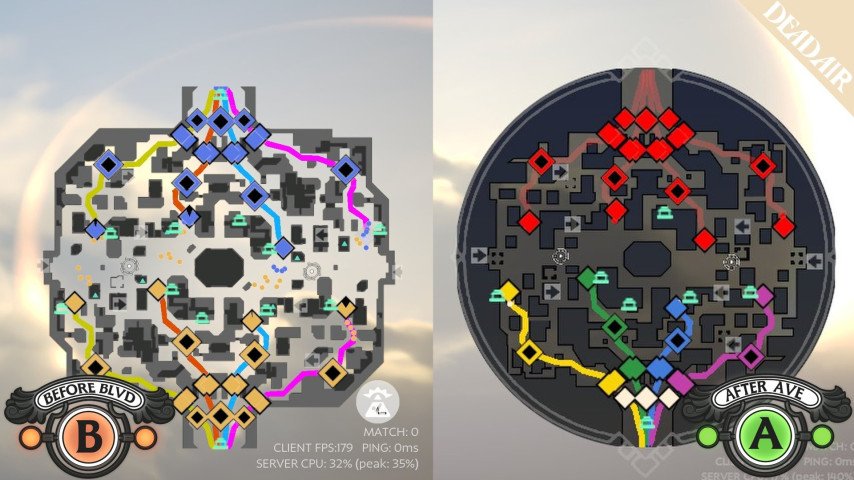
- Guardian Buffs: Defeating Guardians grants temporary power spikes that are crucial for winning extended team fights.
- Walker Disruption: Engaging Walkers forces enemy rotations, creating gaps in their defensive line for your team to exploit.
- Territory Expansion: Controlling objective zones allows for safer farming and reduces exposure to ambushes from unknown angles.
- Rotational Efficiency: Quick responses to objective spawns ensure your team maintains numerical superiority during key engagements.
Frequently Asked Questions
When does Deadlock Ranked Beta Season 1 end?
October 8, 2026 marks the conclusion of the current ranked cycle. This temporary period runs from July 30 to October 8, 2026, after which the system may be adjusted for future seasons.
What are the specific eligibility requirements to unlock Ranked mode?
You must achieve 43 wins in Standard mode and secure at least 15 wins on a single hero. These two conditions must be met simultaneously before the ranked queue becomes accessible.
What is the highest rank achievable in the new 11-rank ladder?
The top tier is Eternus, followed by Ascendant and Phantom. The full progression from lowest to highest is Initiate, Seeker, Acolyte, Sentinel, Mystic, Ritualist, Emissary, Oracle, Phantom, Ascendant, and finally Eternus.